
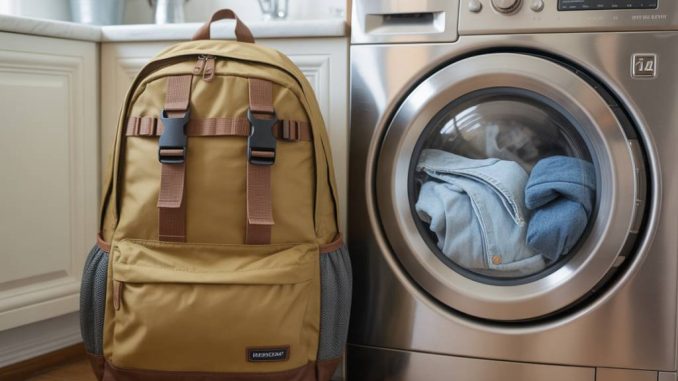
If you’ve ever thrown your gym clothes in the wash, glanced at your dusty backpack on the floor and thought, “You’re next,” this article is for you.
Backpacks live hard lives: commute sweat, gym locker floors, weekend trips, spilled protein shakes, mystery crumbs from three lunches ago. At some point, a quick wipe with a damp cloth just doesn’t cut it anymore.
But can you actually put your backpack in the washing machine without destroying it – or worse, your washing machine?
The short answer: sometimes yes, sometimes absolutely not. Let’s walk through how to tell the difference, how to clean it properly, and how to make sure you don’t end up with a deformed, peeling, sad-looking bag that used to be your daily sidekick.
First question: is your backpack even machine-washable?
Before you toss anything in the drum, you need to play detective. The easiest way: check the care label inside your backpack.
Look for a small tag (usually inside the main compartment or along a side seam) with washing symbols or text instructions. You might see things like:
- “Machine wash cold” – green light (with precautions).
- “Hand wash only” – treat this as a no for the machine.
- “Spot clean only” – definitely no machine.
- “Do not wash / do not immerse” – step away from the washer.
If the label is gone (or never existed), here’s a quick rule-of-thumb guide based on material and structure.
Backpacks you can usually machine wash (with care)
In general, these are your best candidates for a gentle ride in the machine:
- Basic polyester or nylon backpacks – Think everyday school bags, sporty daypacks, simple gym backpacks. No leather, no fancy structure, no metal frame.
- Canvas backpacks without leather trims – Plain canvas, not waxed, not stiffened with cardboard-like structure.
- Lightweight travel daypacks – Packable backpacks made to be folded and crushed usually survive the machine well on a gentle cycle.
These are usually fine as long as you use a gentle cycle, cold water and protect zippers and straps.
Backpacks you should not machine wash
Some backpacks will not forgive you for a wild machine ride. Avoid putting these in the washer:
- Backpacks with leather or faux leather parts – The leather can crack, warp, stain or peel. Faux leather often flakes after a wash.
- Backpacks with a rigid frame – Hiking or trekking bags with internal or external frames can damage your machine and bend out of shape.
- Backpacks with a laptop sleeve and thick padding – Many can be hand-washed, but machine wash may soak the padding excessively and deform the structure.
- Waxed canvas or water-repellent coated bags – Washing machine can strip the protective coating.
- Expensive designer or statement backpacks – Treat them like you’d treat a good blazer: spot clean, hand wash, or send them to a pro.
When in doubt, assume it’s not machine-safe and go for a hand wash. Ten minutes with a sponge beats ten months regretting a ruined bag.
Pre-wash prep: don’t skip this part
This is the boring bit men tend to skip – and the exact step that makes the difference between “fresh bag” and “shredded straps and lint-filled zippers.”
Before washing, do this:
- Empty every pocket – Yes, every single one. Check the hidden pocket where you once stashed emergency cash or gum. Take out pens, coins, keys, receipts, headphones, USB sticks, your dignity from 2018… everything.
- Shake it out – Turn the bag upside down and give it a good shake. Crumbs, sand, dust and long-forgotten almonds will fall out. Do this over the trash or outside.
- Vacuum the inside – Optional but effective. Use a small vacuum attachment to remove grit from corners and seams.
- Remove detachable parts – Take off removable straps, hip belts, chest straps, carabiners, keychains, and any hard accessories. Wash them separately by hand.
- Pre-treat obvious stains – A bit of liquid detergent or stain remover on sweaty straps, food spills or ink marks. Gently rub with a soft brush or cloth. Don’t scrub like you’re cleaning a grill.
- Close all zippers and fastenings – Zip everything up, clip buckles, tighten straps. This prevents tangling and reduces stress on seams.
Once that’s done, your backpack is finally ready to face the machine.
Step-by-step: how to machine wash your backpack safely
Here’s the playbook. Follow it and your bag should come out clean, not mangled.
1. Use a laundry bag or pillowcase
Pop your backpack into a large mesh laundry bag. If you don’t have one, use an old pillowcase and tie a loose knot at the top.
This protects both the bag and the inside of your machine from buckles, zippers and metal parts.
2. Choose the right detergent
- Use a mild liquid detergent. Powder detergents sometimes leave residue in seams and fabric.
- Avoid bleach and harsh stain removers – they can fade colors and damage fibers.
- A small amount is enough; you’re washing one backpack, not your entire wardrobe.
3. Set the washing machine correctly
- Cycle: Gentle or delicate.
- Temperature: Cold water. Warm can soften glues and warp padding.
- Spin speed: Low or medium. High spin can twist straps and stress seams.
If your machine has an “extra rinse” option, it can help remove all detergent from thick padding and straps.
4. Don’t overload the machine
Wash the backpack alone or with a couple of small, soft items like towels to balance the load.
A big, structured backpack mixed with jeans, shoes or heavy clothes can get twisted and pulled in every direction. Not ideal.
5. Start the wash and walk away
Let the cycle run its course. Resist the urge to constantly stop and open the door to “check how it’s doing”. You’ll just interrupt the process and risk leaving detergent in the fibers.
The right way to dry your backpack
Here’s the non-negotiable rule: no tumble dryer. Heat is the enemy here.
Instead, follow these steps:
- Gently reshape the bag as soon as it comes out of the machine. Pull it back into its normal form, straighten the back panel and straps.
- Open all compartments – unzip every pocket so air can circulate inside.
- Hang it upside down – this helps water drain out. Use a hanger through the top loop or clip it by the straps.
- Air dry only – hang in a well-ventilated area, ideally outside but out of direct, blazing sun, which can fade colors and weaken fabric.
- Give it time – depending on padding and fabric, it can take 24–48 hours to fully dry. Don’t rush it by using a hair dryer or radiator; heat can deform parts and affect glues.
Make sure the backpack is completely dry before you put anything back inside, especially electronics or books. Slightly damp + dark interior = the gym locker smell you were trying to get rid of in the first place.
Hand-washing: safer for most structured or premium backpacks
If your bag has a laptop compartment, leather accents, or feels a bit “too nice” to trust to the machine, hand-washing is your best ally.
Here’s how to do it without turning your bathroom into a war zone.
1. Fill a tub or sink with lukewarm water
A bathtub is ideal for big backpacks; a large sink or bucket works for smaller ones. Use lukewarm water, not hot.
2. Add mild detergent
Mix in a small amount of liquid detergent and swirl the water until it’s evenly dispersed.
3. Submerge (if allowed) or focus on key areas
- If the care label doesn’t forbid immersion, you can gently submerge the whole bag and press the fabric to let water through the fibers.
- If the label says “do not immerse”, keep the outside above water and clean in sections with a sponge or cloth.
4. Scrub gently
- Use a soft brush or cloth.
- Focus on high-contact areas: shoulder straps, back panel, bottom (where it touches floors), and handles.
- For stubborn stains, apply a tiny bit of detergent directly and work in circles.
5. Rinse thoroughly
Empty the soapy water and refill with clean water. Rinse the backpack by dipping and gently squeezing the fabric, or by using a showerhead to rinse off soap.
Keep going until no more suds appear. Detergent residue can stiffen the fabric and attract dirt faster.
6. Press out water (don’t wring)
Gently press the bag against the side of the tub or between your hands to remove excess water. Don’t twist or wring it like a towel; that’s how straps get stretched and seams start to complain.
Then dry exactly as in the previous section: reshaped, open, upside-down, and air-dried.
What about bad smells, sweat and gym funk?
If your backpack smells like it’s survived five years of locker rooms and summer commutes (because it has), you may need a bit more than soap and water.
Try these:
- White vinegar in the wash – Add half a cup of white vinegar to the rinse cycle (or a small basin of water during a hand-rinse). It helps neutralize odors. Don’t worry, the vinegar smell disappears as it dries.
- Baking soda pre-treatment – Sprinkle dry baking soda inside the empty backpack, leave overnight, then vacuum it out before washing.
- Extra airing time – After washing, let it dry somewhere with good airflow. Outdoors (in the shade) works wonders.
If the odor still doesn’t go away after a proper wash and airing, the padding or inner lining might be permanently affected. At that point, it might be time to consider retiring the bag.
Quick fixes for specific backpack disasters
A few common problems and what to do about them:
- Ink stains: Dab (don’t rub) with a bit of rubbing alcohol on a cotton pad before washing. Test first on a hidden area to be sure it doesn’t fade the color.
- Oil or food grease: Gently work in a drop of dishwashing liquid (the kind for hand-washing dishes). Let it sit for 10–15 minutes, then rinse and wash as usual.
- Mold or mildew spots: Take this seriously. Brush off dry spores outside, then clean with a mix of water and a bit of white vinegar. Rinse thoroughly and dry completely in a well-ventilated place.
Just don’t mix bleach and vinegar or start brewing home chemistry experiments in your bathroom. Keep it simple.
How often should you wash your backpack?
If your backpack goes everywhere with you – office, gym, weekend trips – it deserves a bit of a routine, just like your sneakers.
- Light use (occasional travel, weekend bag): Deep clean every 6–12 months, spot clean in between.
- Daily commute + gym: Deep clean every 2–3 months, plus quick wipe-downs of straps and back panel every couple of weeks.
- Outdoor / hiking use: Rinse dust and mud off after trips, deep clean when it starts to look and smell like it’s lived two lives.
Regular spot-cleaning and airing it out will keep it fresher for longer and mean fewer full washes.
When cleaning isn’t enough: time to upgrade
Some backpacks have simply done their duty. No amount of detergent is going to fix:
- Frayed or torn straps that feel like they’re one heavy laptop away from snapping.
- A back panel that has lost its shape and support.
- Padding that’s permanently flat or lumpy.
- A smell that comes back two days after every wash.
At that point, cleaning is just delaying the inevitable. The good news: once you know how to care for a backpack properly, your next one will age much better.
Think of it like this: you wouldn’t wear the same shirt every day for three years without washing it properly and expect it to look sharp. Your backpack is part of your look too – especially if you’re in an office, on campus, or meeting clients with it slung over your shoulder.
A clean, well-kept backpack quietly says you pay attention to details, even when you’re just running to catch the train.
So yes, you can put your backpack in the wash without ruining it – as long as you respect its limits, read the label, and treat it with the same basic care you give your favorite jacket. Empty the pockets, prep it properly, keep the water cold, and always let it air dry.
Next time you drop your bag on the floor and catch a whiff of old gym session, you’ll know exactly what to do.